Table Of Content
- The National Institute of Crime Prevention
- Custom Solutions
- and security than locks, alarms and security cameras. CPTED security training
- Popular Communities Near Los Angeles CA
- Prevention Through Environmental Design CPTED training, and CPTED based property
- Natural Access Elements for Private Property18
The National Institute for Crime Prevention (NICP) is thrilled to announce a strategic collaboration with Accredible, a pioneering digital credentialing platform. As The NICP continues to lead in Crime Prevention Through Environmental Design (CPTED) training, this partnership seamlessly integrates our expertise with Accredible’s state-of-the-art digital credentials. At NICP, Inc. we understand the difficulty many organizations have in sending their personnel to distant locations for training. The Innovations Grant would finance the duplication and distribution of the Design Out Crime videotape to a much wider audience around Southern California and to other interested cities around the nation.
The National Institute of Crime Prevention
Although First Generation CPTED did not originally provide specific strategies to build social cohesion, well-seasoned practitioners will recognise that the physical environment cannot be divorced from the social environment in which it operates. It originated in the contiguous United States around 1960, when urban renewal strategies were felt to be destroying the social framework needed for self-policing. Architect Oscar Newman created the concept of "defensible space", developed further by criminologist C. Growing interest in environmental criminology led to detailed study of specific topics such as natural surveillance, access control and territoriality. The "broken window" principle, that neglected zones invite crime, reinforced the need for good property maintenance to assert visible ownership of space. Appropriate environmental design can also increase the perceived likelihood of detection and apprehension, known to be the biggest single deterrent to crime.
Custom Solutions

In this case, environmental design is defined as physical design and immediate situational factors such as site design, territorial boundaries, the number of people using or observing the space, the purpose of their use, temporal factors, and disorder. It does not include broader socio-cultural factors such as poverty level, racial and gender inequality, family structure, criminal laws, and exposure to violence. Crime Prevention Through Environmental design, also known as CPTED, is a strategy that brings together community members to examine how an area’s physical design can influence human behavior, reduce crime, fear of crime, and improve quality of life.
and security than locks, alarms and security cameras. CPTED security training
Growing a Sense of Ownership with CPTED - Security Management Magazine
Growing a Sense of Ownership with CPTED.
Posted: Sun, 01 May 2022 07:00:00 GMT [source]
In the 1960s Elizabeth Wood developed guidelines for addressing security issues while working with the Chicago Housing Authority, placing emphasis on design features that would support natural surveillability. Her guidelines were never implemented but stimulated some of the original thinking that led to CPTED. — If you are having an issue with graffiti in a certain area, reach out to local artists and turn the area into something artistic. They will use their own supplies, it will add positive users to the area, and they will have a sense of pride and be invested in seeing that it stays in good condition. Abnormal Actors — This refers to negative users and where attention needs to be paid in order to develop a plan to protect and maintain a specified location. It is important not to focus on the individual, but on what about the location is drawing the abnormal actors to commit criminal activity in that location.
Popular Communities Near Los Angeles CA
CPTED is a crucial element of the service that Design for Security provide, and the benefits are optimal when the strategy is applied in the earliest possible stage of the design process, before integral design decisions are set in stone. CPTED however, should not operate alone as the sole crime prevention method; and instead should work in conjunction with other social, environmental and community-based strategies. CPTED is not a stand-alone answer to preventing neighborhood crime, however it does outline social, policy, and planning interventions that can bring together planning and public health professionals to create safe and healthy communities and public spaces in our neighborhoods.
Access Control Elements for Public Spaces
Some sections, including all the toothpaste and most of the detergent, were locked behind long, clear cages. The criminal complaint filed by Bonta’s office this year included text messages suggesting that the defendants, who prosecutors say targeted beauty retailers Ulta and Sephora, used that method. The Council on Criminal Justice, a nonpartisan research organization, tracked shoplifting trends in 24 cities from 2019 to the middle of 2023 and found that rates were down in more than two-thirds of the cities. But that magnitude — which retail industry groups say has reached “unprecedented” and “epidemic” levels, despite data showing such characterizations are overblown — varies by city.
By placing signs such as caution children playing and signs for certain activities in the area, the citizens of that area will be more involved in what is happening around them. They will be more tuned in to who is and who isn't supposed to be there and what looks suspicious. Ultimately, this diminishes residents' fear because they know that a potential offender can easily be observed, identified, and consequently, apprehended. By increasing the sense of security in settings where people live and work, it encourages people to take control of the areas and assume a role of ownership. When people feel safe in their neighborhood they are more likely to interact with one another and intervene when crime occurs.
Now let us turn to take a look at how Los Angeles does for violent crimes specifically, and then how it does for property crimes. This is important because the overall crime rate can be further illuminated by understanding if violent crime or property crimes (or both) are the major contributors to the general rate of crime in Los Angeles. Collecting and analysing better-quality crime data can help reduce negative outcomes of such designs. Practitioners need to carefully consider the potential harm and negative impacts on the quality of life, not to mention the ethical implications, of any intervention before implementation. It’s also important to consider alternative strategies that could be more effective than deterrents. Examples range from installing signage to show ownership and deter outsiders, to installing better locks, doors and windows.
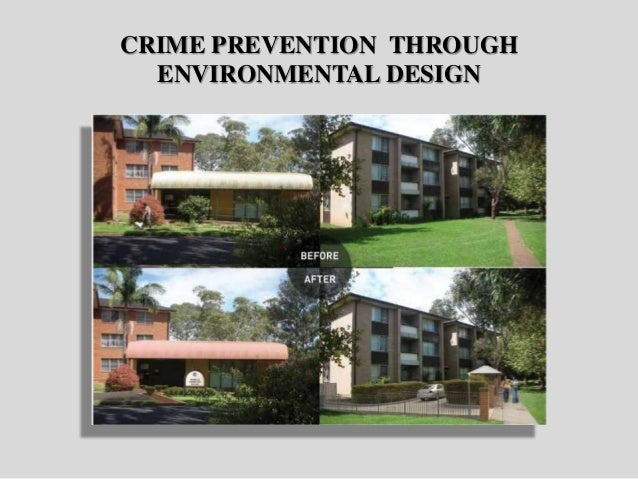
County in late 2022 was slightly lower than it had been 2014, according to a report from the Public Policy Institute of California, a nonpartisan think tank that analyzed state Department of Justice statistics. During that eight-year period, only three of the state’s 15 most populous counties — all in the San Francisco Bay Area — saw increased rates of shoplifting, a misdemeanor crime defined as stealing goods valued at less than $950. The noticeable drop in auto-part thefts toward the end of 2022 is also likely attributed to many people returning to work and parking in more secure garages during the day, said Richard Rosenfeld, an emeritus professor of criminology at the University of Missouri-St. The rise in auto-part thefts began during the pandemic, when many Los Angeles residents were stuck at home and the city suspended many parking regulations. This is often used to discourage certain groups, which are often not actual criminals, from using specific spaces. Similarly, in the UK several studies have shown significant reductions in crime through using principles such as building houses to face each other and the use of permeable fencing and managing foliage to maximise visibility.
Simple Crime Prevention Techniques Calendar Port St. Lucie - City of Port St. Lucie
Simple Crime Prevention Techniques Calendar Port St. Lucie.
Posted: Thu, 26 Aug 2021 07:00:00 GMT [source]
That's because it contains major business and entertainment areas and, as a result, more foot traffic from local visitors, tourists and professionals, Morales said. One of the neighborhoods that experienced a major surge in crime was downtown Los Angeles, which in the years preceding the pandemic had increasingly become a regional hub for entertainment, dining and business. Newly elected Mayor Karen Bass, who has vowed to make solving L.A.'s homelessness crisis her top priority in her first year in office, plans to move people from street encampments into hotel rooms and permanent housing. More than three years after the COVID-19 pandemic began, USA TODAY took a look at the data to assess how much crime really has gone up and whether people are more, or less, safe than they were back in 2019. CPTED Security Consultants were part of the design team with security design review responsibilities for this project. CPTED Security co-hosted the international gathering of security professionals to discuss and develop solutions to graffiti problems faced throughout the world.
In property crime, downtown saw the highest percentage increase as well as crime rate, with a nearly 57% increase in property crime between 2019 and 2022 and roughly 167 property crimes reported per 1,000 residents. In NSW, it’s mandatory to include a report assessing new large developments against principles of crime prevention through environment design. But such assessments are generally inconsistent, incomplete, too generic and of poor quality.
Built environment implementations of CPTED seek to dissuade offenders from committing crimes by manipulating the built environment in which those crimes proceed from or occur. The six main concepts according to Moffat are territoriality, surveillance, access control, image/maintenance, activity support and target hardening. Applying all of these strategies is key when trying to prevent crime in any neighborhood crime ridden or not. Crime Prevention Through Environmental Design (CPTED) is a multi-disciplinary approach for reducing crime and fear of crime. CPTED strategies aim to reduce victimization, deter offender decisions that precede criminal acts, and build a sense of community among inhabitants so they can gain territorial control of areas to reduce crime opportunities.
It would also allow for more extensive printing and distribution of the written guidelines for use by all Neighborhood Watch groups in the City and by the membership of all major professional organizations. The City also hopes to create a Design Out Crime Web site, and the Innovations Grant would help finance the necessary labor costs for its launch. For example, Design Out Crime recommends the planting of prickly vegetation below certain external windows. In this situation, the designer could choose flowering bougainvilleas, desert-style cactus plants, or any vegetation native to the particular region.


No comments:
Post a Comment